The Benefits of Full Arch Treatment for Complete Tooth Replacement
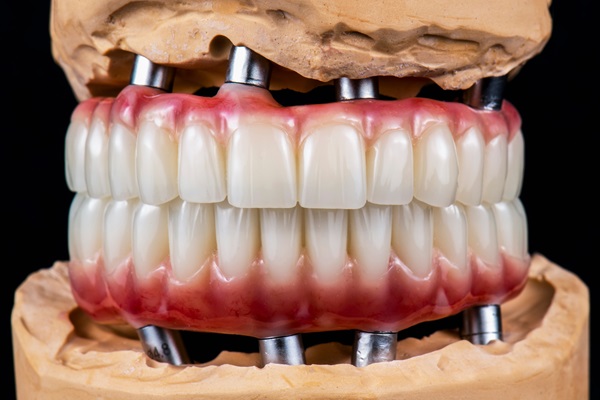
Full arch treatment offers a transformative solution for patients seeking complete tooth replacement. Unlike traditional dentures, this advanced procedure uses strategically placed dental implants to replace the upper and lower teeth permanently. Thus, it keeps the jawbone stimulated and recreates a natural-looking smile. Learning more about the many benefits of full arch treatment can help you get a better idea of whether it is right for you.
What is full arch treatment?
Full arch treatment involves replacing an entire arch of missing teeth using four to six dental implants as a foundation. Implants are biocompatible metal screws that act as artificial tooth roots. An oral surgeon can implant them into the jawbone, allowing them to fuse with it through a process called osseointegration. Next, the surgeon will attach a permanent denture via metal connecting pieces (abutments). The result is a fixed, restored smile.
Unlike traditional dentures, which rest on the gums and typically rely on adhesives for stability, full arch treatment is a permanent, long-term solution. The secure attachment to the jawbone prevents movement, allowing patients to eat, speak, and smile easily and confidently. Patients simply need to care for them like natural teeth by brushing, flossing, and getting dental checkups regularly.
Benefits of full arch treatment from an oral surgeon
Patients prefer full arch treatment for several reasons, including the following key benefits:
Restored smile appearance
Full arch treatment permanently restores the appearance of a complete, healthy smile. The oral surgeon will attach a permanent denture outfitted with artificial teeth designed to look natural and complement facial features. Once healed, patients can expect renewed confidence as the treatment addresses gaps caused by tooth loss and enhances overall facial harmony.
Enhanced comfort and functionality
Since the implants are secured in the jawbone, full arch treatment can offer superior comfort and functionality. The fixed nature of the artificial teeth eliminates concerns about slippage or discomfort during meals or conversations, which are common issues experienced when wearing traditional dentures. With full arch treatment, patients can enjoy improved chewing efficiency and restored speech abilities, making it easier to enjoy a varied meal — even while talking with others.
Durable and stable
The foundation of dental implants in full arch treatment ensures long-term durability and stability. When implants integrate with the jawbone, they provide a solid foundation that can withstand the pressures of daily use and general wear and tear. Their durability also reduces the need for frequent adjustments or replacements if the patient practices good oral hygiene and dental care.
Improved jawbone health
Another significant benefit of full arch treatment is jawbone health and preservation. Dental implants stimulate the jawbone every time the patient chews, stopping it from shrinking and keeping it healthy. Other tooth replacements, such as traditional dentures, do not engage the jawbone, which is why bone loss is so common after tooth loss.
Preserved facial appearance
Full arch replacement also preserves facial appearance through jawbone stimulation. When jawbone loss occurs, the face will start to appear sunken. By opting for this treatment, patients can avoid changes to their facial structure and harmony.
Consult an oral surgeon for complete tooth replacement
An oral surgeon plays a major role in the success of full arch treatment by ensuring precise implant placement and personalized care. To learn if you qualify for this treatment, consult a surgeon at Premier Oral Surgery. Get started by calling us today for an appointment.
Request an appointment here: https://www.premieroralsurgeryct.com or call Premier Oral Surgery at (203) 945-0049 for an appointment in our Norwalk office.
Check out what others are saying about our services on Yelp: Full Arch Treatment in Norwalk, CT.
Related Posts
Appearance may be one of the first things people think about when it comes to tooth replacement. However, improved appearance is just one of the many benefits of replacing missing teeth. Tooth replacement can be key to improving not only how you feel about your smile but also boosting your oral health.Whether one chooses dentures,…
A sinus lift procedure goes by many other names, including sinus elevation, sinus augmentation, and sinus graft. It can be an important step in the process of having a dental implant placed in the upper jaw to replace a missing tooth. The procedure involves raising the floor of one of the maxillary sinuses and filling…
Bone grafting is a minor surgical treatment done under local anesthetic to replace depleted bone tissue. The grafting material may be inserted into a tooth socket just after a tooth is removed or at a location where a tooth has been absent for an extended period. Over the next few months, your body will produce…
If non-surgical methods cannot treat a patient's oral health issue, the patient may be a candidate for oral surgery. These procedures can include anything from a simple tooth extraction to a more complex procedure such as jaw surgery. However, besides need, patients must also fit other important criteria. Here are some key points patients should…